
There are trends in eyewear, and then there are truths. Translucent acetate is a truth.
It has survived minimalism, logomania, the wire-frame revival, and every micro-trend that came and went between. It has never needed a comeback because it never really left , it just waited, sitting on the faces of architects, artists, and the quietly influential, for everyone else to catch up.
This is the story of how translucent acetate became eyewear's most enduring material , and why, seven decades later, it still says something that nothing else can.
“Light passes through it differently.
That's always been the point.”
The 1950s: A Postwar Material Revolution


Acetate , cellulose acetate, to be precise , was not invented for eyewear. It emerged from the textile and film industries, valued for its flexibility, its ability to hold color, and its relative lightness compared to metal.
When it arrived in optical, it changed everything. Frame designers could now work in three dimensions, in color, in personality. And translucent acetate , where the material is tinted but not opaque , was the move that separated the artistic from the merely functional.
Postwar optimism translated directly into material. People wanted things that felt new, modern, and considered. A translucent grey or warm amber frame wasn't just practical , it was a statement of taste in an era that was just learning how to express itself again.
The 1960s–80s: The Creatives Claim It
Through the 1960s and into the 1970s and 80s, translucent acetate became the quiet uniform of a specific kind of person. Not the loudest person in the room , the most interesting one.
Architects. Editors. Photographers. Writers who took their work seriously and their image even more so. The frame that communicated: I have taste, and I don't need to explain it.
This wasn't a trend born of marketing. It was natural selection , the material rewarded restraint in a way that solid black or tortoise simply couldn't. When light passes through translucent acetate, it shifts with your environment. The same frame reads differently in morning light, in a fluorescent office, under a warm restaurant candle. It works with you.

Why It Never Left: The Case for Translucent in 2026
Every decade brought a new dominant aesthetic that was supposed to make translucent obsolete. Minimalism said less was more , translucent survived because it already was less. The logomania era rewarded boldness , translucent survived because its subtlety became the counterpunch to excess.
Today, in the era of quiet luxury , where the flex is restraint, where knowing what you don't need to say is the ultimate signal , translucent acetate is as relevant as it has ever been.
There's also a practical truth underneath the aesthetic one: translucent frames are genuinely easier to wear. They carry less visual weight on the face. They don't compete with skin tone or hair color. They work across seasons, wardrobes, and decades in a way that trends simply don't.
“The frame works with you,
not for the room.”
From New York: Why We Made the Harold in Translucent
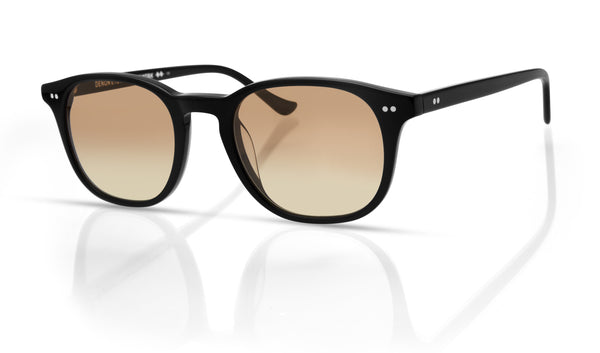
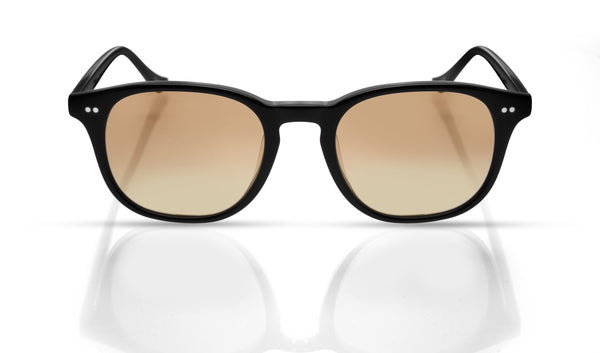
The Harold got its name from a personal friend of ours who supported Denon Eyewear when we first opened. The frame features 3-dimensional finishing at the front that carries onto the temples seamlessly. This was done intentionally to create a sophisticated, elevated design on an otherwise classic shape , and translucent acetate was the only material that could let that craftsmanship speak for itself.
The result is a frame that carries the lineage of translucent acetate forward , mid-century proportion, smoke crystal acetate chosen specifically for the way it interacts with light. Not a frame that announces itself. One that reveals itself.
Available for prescription and plano. View the full optical collection →